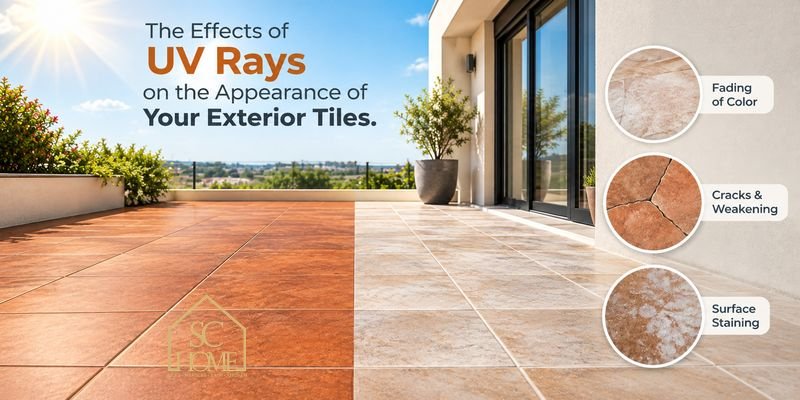
The presence of sunlight brings vitality into homes, yet it leaves behind its own legacy. UV rays, for days and days, keep working on the surfaces of your home’s exterior. The fading of colors, the dulling of glazes, and even the vibrant patterns lose their shine little by little each day. Usually, this process doesn’t happen in one night, which is why many property owners tend to ignore this problem until it becomes apparent enough. Outdoor wall tiling is the surface that comes in contact with UV rays more than any other surface.
Overexposure will weaken the surface, causing chalking and micro-cracks that trap moisture. Dark-colored tiles usually reveal signs of heat exposure, while light-colored ones turn yellow over time. The extent of the damage is influenced by the material of the tiles, quality of the glazing, and climatic conditions. Cleaning and the use of sealers can help reduce the above effects to a great extent. The following discussion explains the impact of the sun’s rays on outdoor tiles.
Various Ways UV Rays Affect the Appearance of Your Exterior Tiles
Continuous exposure to ultraviolet rays may alter the look of tiles used outdoors. This could result in fading, color changes, and a lack of shine in the tiles, especially those that are in exposed spaces.
- UV rays can fade tile colors
One of the more easily visible impacts of being exposed to the sun for a long period of time is fading. UV rays could cause a breakdown of the pigments used on colored tiles. A very vibrant blue could lose its vibrancy. A vivid red could lose its vibrancy. Even neutral colors would begin to look faded. It is a gradual process that is hard to detect until one compares the exposed tiles to the shaded ones.
- Choose tiles designed for outdoor conditions
One of the most basic ways of dealing with such issues due to UV rays is through choosing the appropriate tile from the very beginning. When buying materials for the exterior surface, it is important to find those materials that will be resistant to sunshine, heat, moisture, and changes in temperature. Technical data should be considered rather than the color and appearance of the material. If there is strong sunshine on the wall, then outdoor tiles for walls should be selected.
- Uneven fading can affect the overall look
All the parts of an exterior wall don’t get equal sunlight exposure. There are some parts that get little sunlight due to their corner positions, coverage from other structures, balconies, and areas under the roofs. This will result in the creation of unequal colors over time. One part will maintain its original color while others get a bit lighter.
- Glazed tiles can react differently
The glazed tiles have an upper coating which may affect the way they react to the sun’s rays. A high-quality glazing will offer protection to both the tile itself and the color. However, the effects of prolonged exposure to high levels of UV rays should not be ruled out. Check the manufacturer’s guidelines when choosing tiles for outdoor use.
Conclusion
While UV rays may take several years before the effects become evident, it does happen. Fading, discoloration, and other signs of wear and tear are sure to occur after some time. However, the right choice of tiles and a few easy tips should help you maintain the beauty of your outdoor wall for a long time. Select tiles suitable for outdoor use, take into consideration the level of exposure to the sun, and do not forget to keep the tiles clean.
